Scaling a Compost Extract Line: Tanks, Agitation, Filtration, and Ingredient Addition Points
Compost extract can be a useful liquid foundation for biofertilizer products, but it becomes unforgiving as volume increases. What works in a tote, drum, or small recirculation loop can become inconsistent once the line moves into fixed tanks, higher flow rates, and scheduled production windows.
For a biofertilizer manufacturer, the goal is not simply to make a darker extract. The goal is to build a controlled process that supports substrate conversion, organism viability, manageable solids, repeatable blending, and clean downstream movement into holding, finishing, and packaging.
Enzymesportal works as an enzyme supplier for biofertilizer manufacturing with a focus on practical plant-floor outcomes: better feedstock breakdown, more predictable liquid handling, and enzyme selections that fit around living microbial systems rather than disrupting them.
Start with the Product You Need to Move
Before specifying tanks or pumps, define what the extract must do in the final biofertilizer formulation.
Key questions include:
- Is the compost extract the main biological carrier, a nutrient-rich process intermediate, or a minor input?
- Will the final product contain live organisms added before or after extraction?
- How much suspended solid is acceptable for filling, spraying, drip compatibility, or seed-treatment use?
- Does the line need to run continuously, semi-continuously, or batch-by-batch?
- Where will enzymes, microbial cultures, soluble nutrients, stabilizers, or carriers enter the process?
These decisions shape the whole line. A compost extract intended for coarse soil application can tolerate different solids, residence time, and filtration choices than one intended for fine-packaged liquid biofertilizer.
Tank Selection: Build for Contact, Drainage, and Cleaning
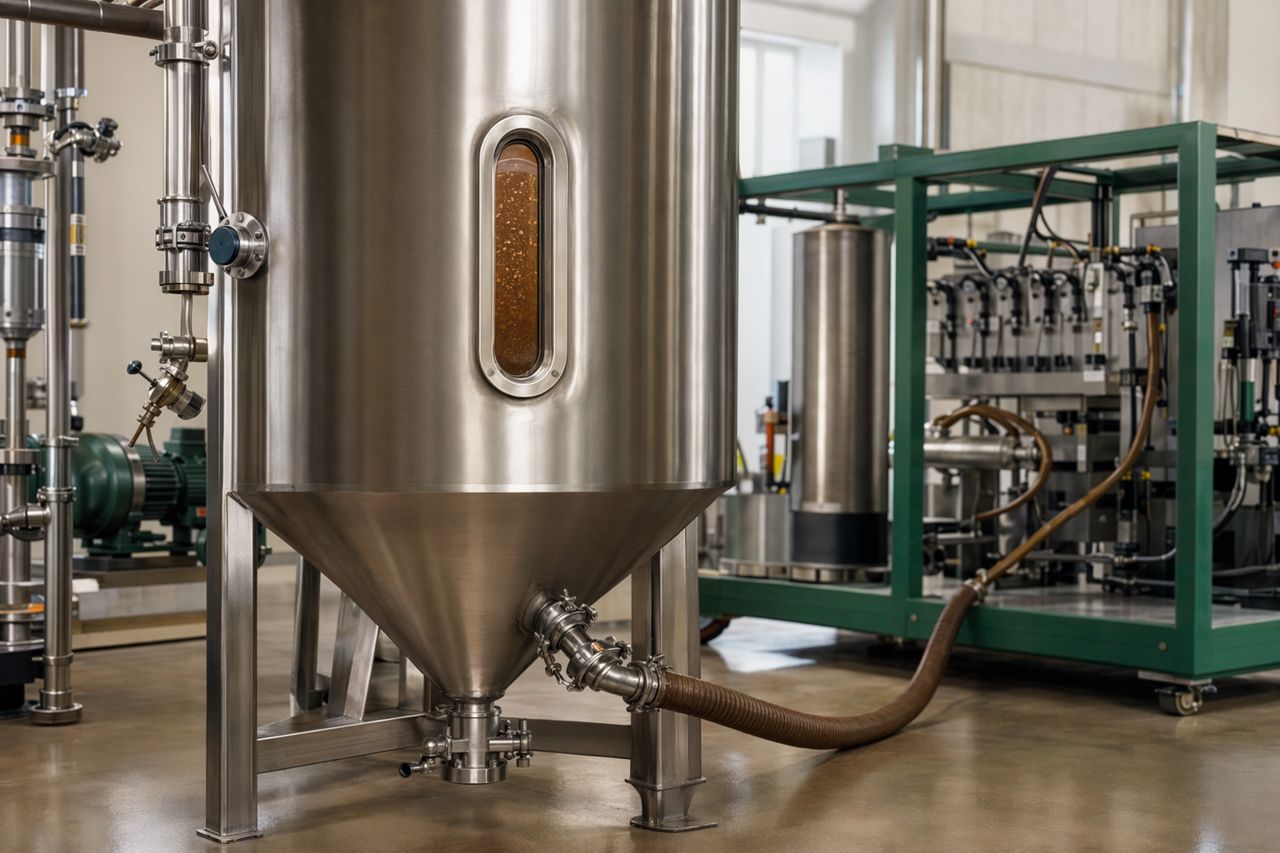
Extraction tanks
The extraction tank should provide enough working volume for contact between water, composted substrate, added nutrients, and process enzymes without turning the mix into an unmanageable slurry. In scale-up, usable working volume matters more than nominal tank size.
Important features include:
- Bottom geometry that avoids dead zones
- Drain design that can handle suspended organic particles
- Access points for inspection and cleaning
- Ports for staged additions
- Headspace suitable for foam and aeration behavior
- Materials compatible with organic acids, nutrients, and sanitation practices
Cone-bottom or sloped-bottom vessels often simplify solids removal. Flat-bottom tanks may be acceptable, but they usually require stronger cleaning discipline and better drain placement.
Holding and balance tanks
A compost extract line often benefits from at least one downstream balance tank. This allows extraction, clarification, enzyme contact, microbial addition, or final blending to occur without forcing every step to run at the same pace.
For manufacturers scaling from pilot batches, this is where many headaches can be prevented. A small holding tank can protect packaging from upstream variability and give operators time to confirm appearance, viscosity, odor, settleable solids, and formulation readiness.
Agitation: Enough Movement Without Damaging the Biology
Agitation must suspend, wet, and circulate the substrate. It should not shred sensitive biological inputs or create unnecessary heat, foam, or oxygen stress.
What agitation needs to accomplish
In compost extract production, agitation typically supports four jobs:
- Wetting the composted material evenly
- Keeping solids from settling too quickly
- Distributing enzymes, nutrients, and pH-adjusting ingredients
- Moving soluble organics into the liquid phase
As production volume increases, under-agitation causes zones of poor extraction. Over-agitation creates its own problems: foam, excessive fines, higher filtration load, and avoidable stress on live organisms.
Practical agitation choices
Common options include:
- Low-shear impellers for steady turnover
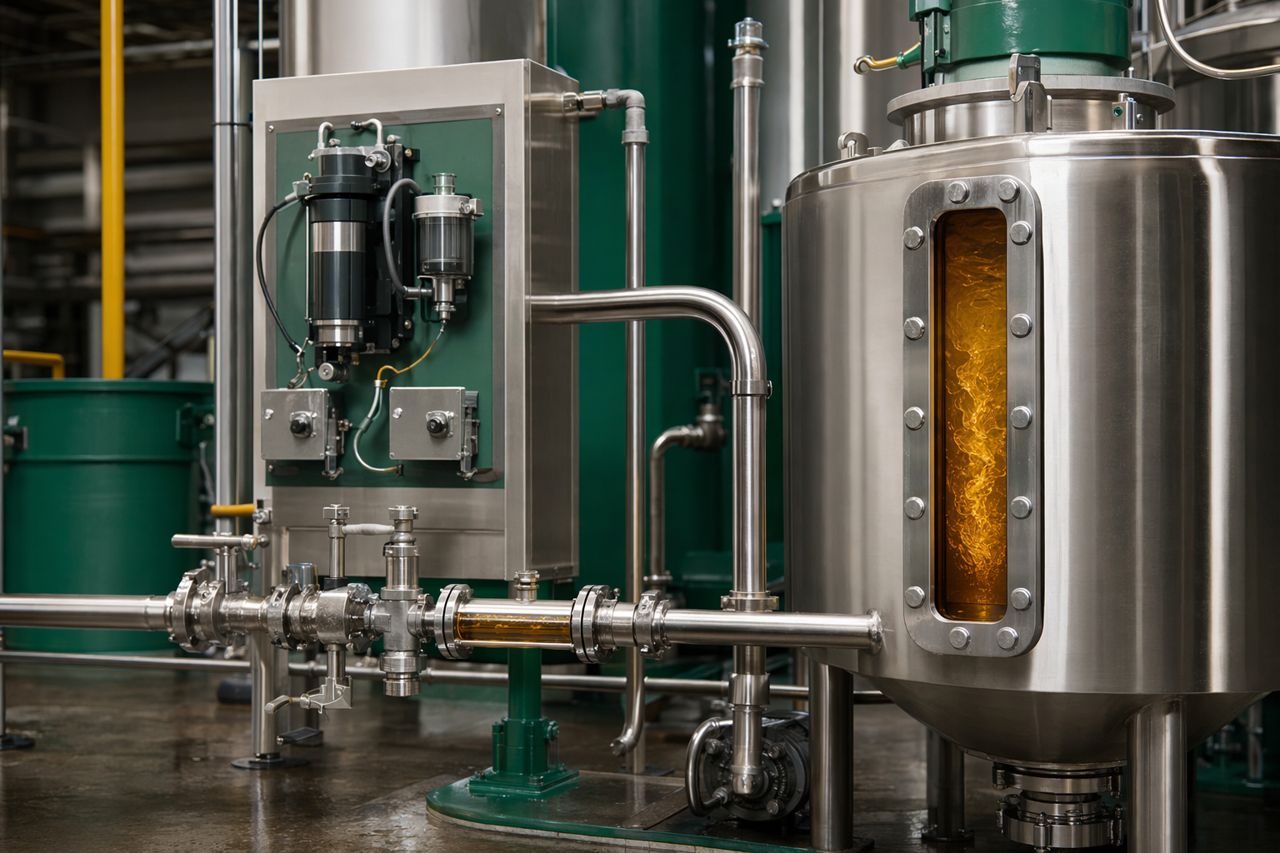
- Recirculation loops for external mixing and inline addition
- Air-assisted mixing when oxygen transfer is useful
- Intermittent agitation when solids suspension is needed only during defined steps
The best choice depends on whether the extract is being prepared before or after microbial inoculation. If live organisms are already present, agitation strategy should protect viability and avoid unnecessary mechanical stress.
Filtration: Decide What Must Be Removed and What Should Remain
Filtration is often where a compost extract line either becomes dependable or becomes a daily bottleneck. The question is not simply, "How fine can we filter?" The better question is, "What level of solids control gives us reliable downstream handling without stripping away the product value?"
Staged solids management
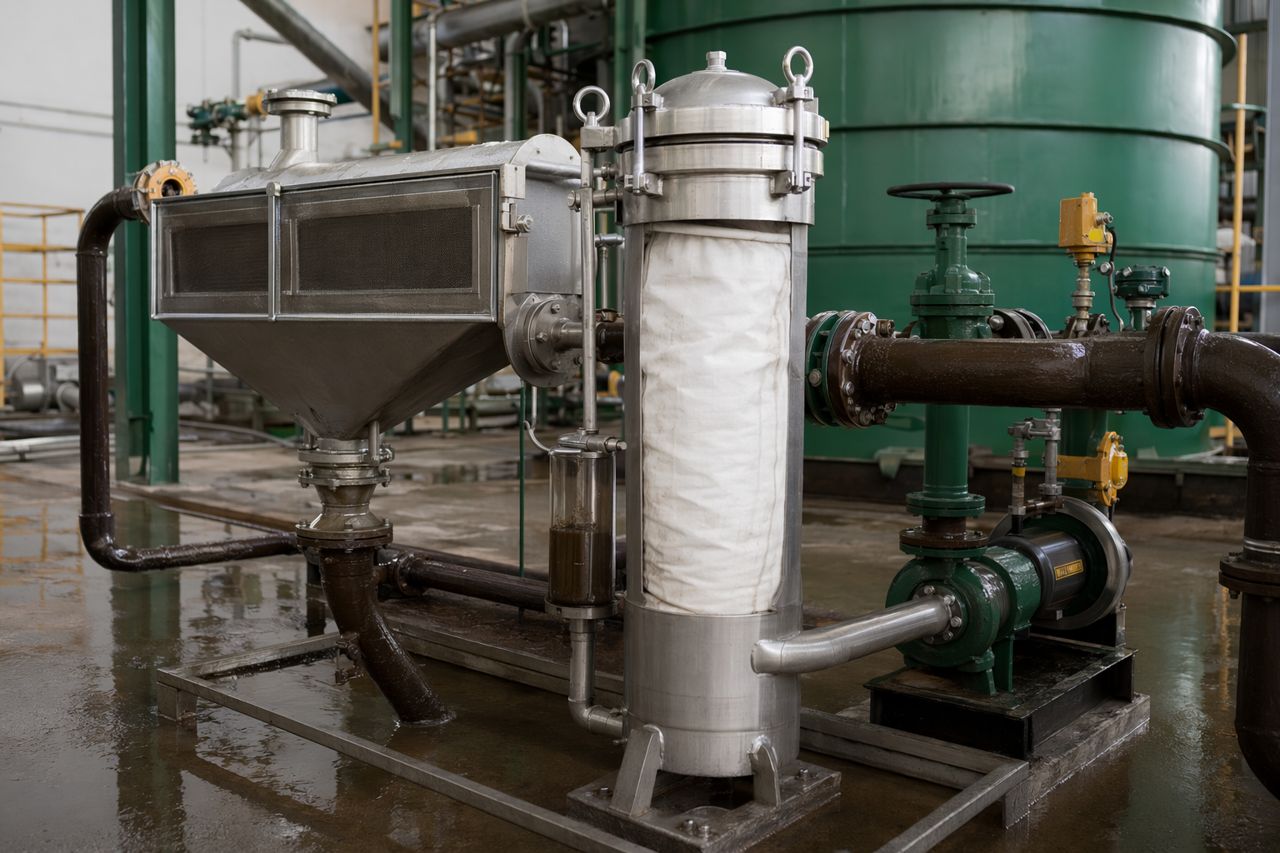
A scaled line may use more than one separation step:
- Coarse screening to remove large particles and fibers
- Settling or decanting to reduce heavy solids load
- Bag or cartridge filtration for packaging protection
- Inline strainers before pumps, meters, or filling heads
Staging prevents the final filter from doing all the work. It also reduces downtime, pressure swings, and operator intervention.
Match filtration to final use
For soil drench products, a moderate suspended solid profile may be acceptable. For fertigation, foliar-adjacent use, or precision dispensing, the line may need tighter solids control. This affects compost preparation, extraction time, enzyme selection, and when insoluble carriers or microbial biomass are added.
Ingredient Addition Points: Timing Drives Consistency
Ingredient timing is one of the most important scale-up decisions. In small batches, everything often goes into the same tank at nearly the same time. At production scale, that approach can reduce control.
Common addition points
A compost extract line may include addition points for:
- Process water conditioning
- Compost or humic substrate charging
- Enzyme addition for organic matter conversion
- Carbon or mineral nutrients
- pH adjustment
- Microbial inoculants
- Stabilizing ingredients
- Carriers, wetting agents, or compatibility aids
Each addition point should have a purpose. Ingredients that need strong mixing should enter before low-shear finishing. Ingredients that affect organism viability should be introduced under controlled conditions. Ingredients that increase solids should be considered before final filtration strategy is locked.
Where enzymes fit
Enzymes are typically most useful when they are given proper contact with the composted substrate or selected organic inputs before the most sensitive biological additions are made. This can support improved breakdown of plant-derived residues, release of soluble organic fractions, and more consistent liquid handling.
As an enzyme supplier for biofertilizer manufacturing, Enzymesportal helps manufacturers think through enzyme placement around practical constraints: tank time, temperature range, pH window, agitation style, microbial compatibility, and downstream filtration behavior.
A Practical Scale-Up Flow
A controlled compost extract line may follow a structure like this:
- Water preparation: Charge water and adjust basic process conditions.
- Substrate wetting: Add composted material under controlled agitation.
- Enzyme contact: Add selected enzymes where they can interact with organic substrate before final biological finishing.
- Extraction hold: Maintain circulation or intermittent mixing for consistent contact.
- Primary solids reduction: Screen, settle, or decant to remove large particles.
- Formulation blending: Add microbial cultures, nutrients, stabilizers, or carriers under conditions that protect viability.
- Final filtration or straining: Protect filling equipment and end-use compatibility.
- Packaging feed: Move to a balance tank or directly to filling with minimal unnecessary hold time.
The exact sequence depends on the product, but the principle is stable: do the rough work early, do sensitive additions later, and avoid asking one tank to solve every problem.
Process Controls Worth Watching
At production scale, operators need simple controls that connect directly to batch quality. Useful checkpoints may include:
- Charge weights and water volume accuracy
- Compost lot identity and pre-screening condition
- Mixing time and agitation setting
- Addition order and contact time
- Temperature and pH trend
- Foam behavior
- Settling behavior and filter loading
- Visual consistency after hold and after filtration
- Microbial viability checks according to the manufacturer’s internal quality program
The most valuable records are the ones your operators will actually use. A short, reliable batch sheet is often more effective than a complex document that is completed after the fact.
Common Scale-Up Problems and How to Prevent Them
Problem: Filters blind too quickly
Likely causes include too many fines, over-agitation, weak pre-screening, or late addition of insoluble ingredients. Consider staged separation, gentler mixing, or shifting some additions after primary solids removal.
Problem: Batch-to-batch extract strength varies
Look at compost lot variation, water-to-substrate ratio, extraction hold time, and enzyme contact conditions. Inconsistent wetting and dead zones in the tank are frequent contributors.
Problem: Microbial performance drops after scale-up
Review shear exposure, temperature drift, pH changes, sanitation residues, and ingredient timing. Live organisms should not be forced through every aggressive extraction and filtration step unless the product is designed for it.
Problem: Packaging speed is unpredictable
Check balance tank design, final strainer placement, suspended solids profile, pump selection, and foaming behavior. A stable packaging feed starts upstream, not at the filler.
Supplier Reliability Matters at Scale
Once a compost extract line is scheduled into regular production, enzyme supply becomes part of manufacturing reliability. A useful supplier should support more than a product list. They should help connect enzyme choice to feedstock type, process sequence, organism compatibility, and handling behavior in the plant.
Enzymesportal supports biofertilizer manufacturers with enzyme solutions selected for industrial practicality, not just lab interest. We help teams evaluate where enzymes belong in the line, how they interact with the substrate, and how to keep the process workable for operators.
Ready to Review Your Compost Extract Line?
If you are scaling a compost extract process or redesigning addition points around enzymes and live cultures, Enzymesportal can help you assess the line from tank charging through final packaging feed.
Request a quote using the on-site form and share your substrate type, batch size, current flow, and the main production issue you want to solve.