Cellulase, phytase, protease, and amylase for organic fertilizer plants
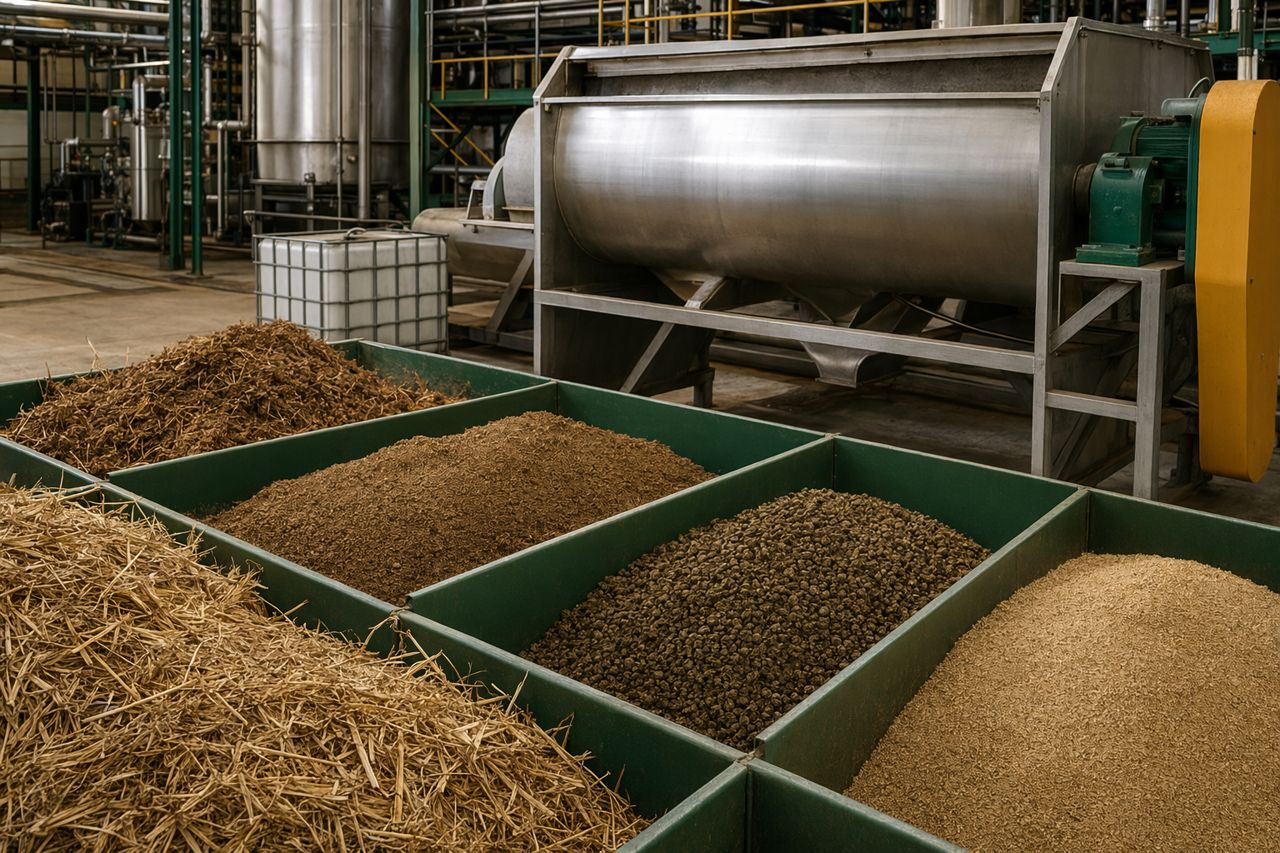
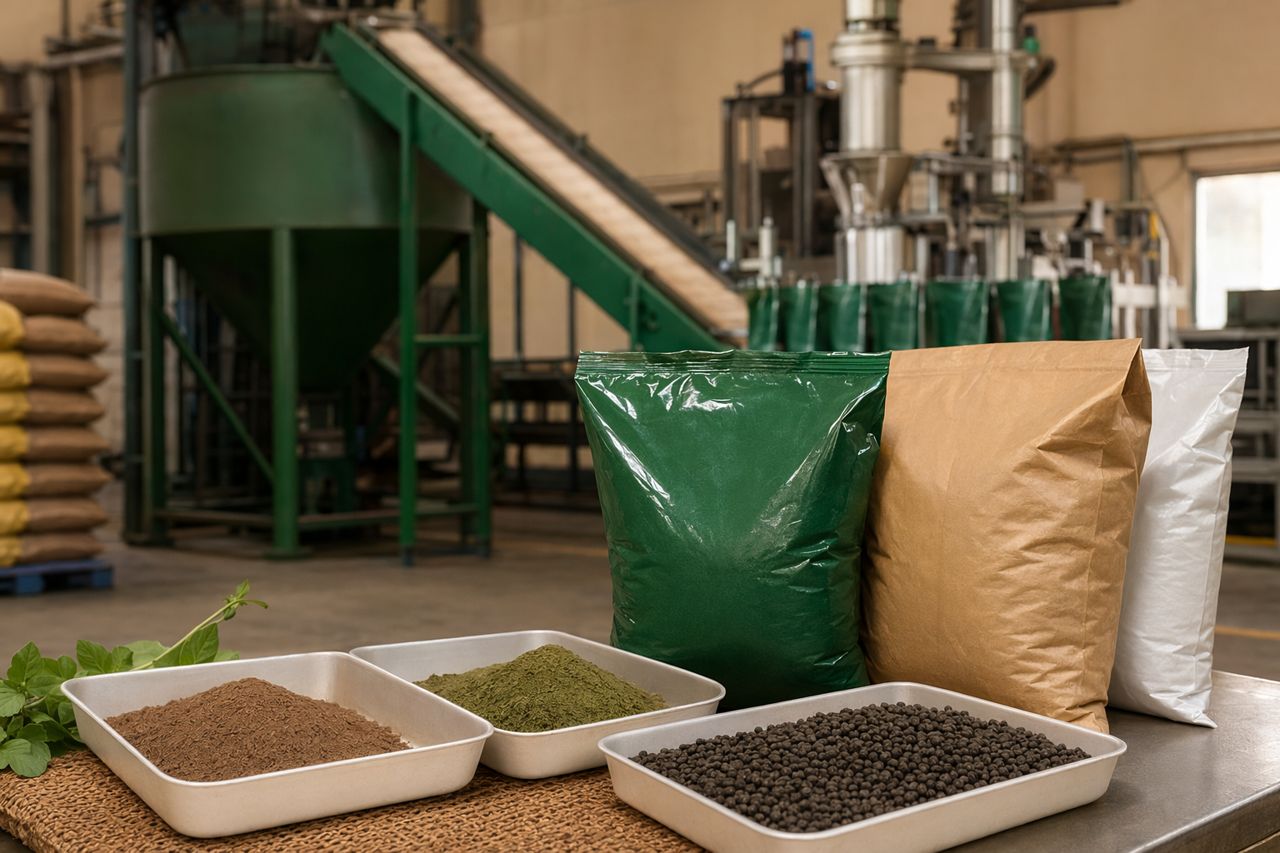
Organic fertilizer and biofertilizer plants often work with variable raw materials: composted biomass, crop residues, oilseed meals, molasses fractions, starch-bearing byproducts, microbial inoculants, mineral carriers, and humic inputs. The right enzyme choice helps make those inputs more workable, more consistent, and better aligned with the biology of the final product.
Enzymesportal is an enzyme supplier for biofertilizer manufacturing focused on practical plant requirements: substrate conversion, batch repeatability, downstream handling, organism compatibility, documentation, and reliable supply.
This guide is for organic fertilizer plants, amino-acid and seaweed fertilizer makers, and the distributors who resell their inputs: compare the enzyme types side by side, then request a bulk quote.
Wholesale and bulk supply for manufacturers and resellers. Send the enzyme type, the raw material it will treat, your quantity and the destination country. Request a quote
Enzymes made for fertilizer raw materials: oilseed meals and seaweed
Two raw materials now have enzymes made specifically for fertilizer production.
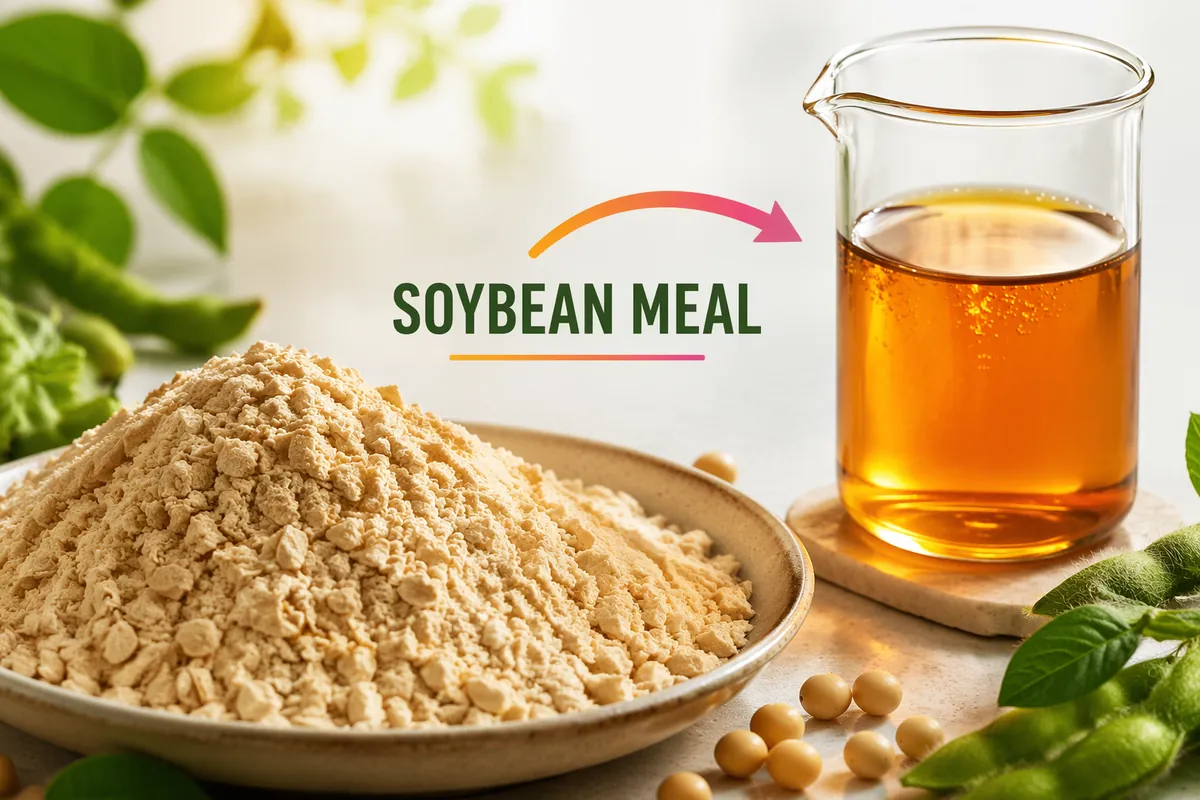
Oilseed meal for amino-acid water-soluble fertilizer. A dedicated enzyme for amino-acid water-soluble fertilizer is an industrial-grade solid additive. It is a protease preparation for hydrolysing soybean meal and peanut meal. For a plant, that means one enzyme product that turns a common, bought-in protein meal into the amino-acid base of a water-soluble fertilizer. Ask for it by its job, "amino-acid water-soluble fertilizer enzyme for soybean or peanut meal", not just as "protease".
Seaweed for seaweed fertilizer and extracts. A seaweed hydrolysis enzyme is an industrial-grade solid enzyme preparation. It is a blended enzyme product rather than a single enzyme. For a seaweed fertilizer line, that is one product to quote instead of several separate enzymes.
| Raw material | Enzyme product to ask for | Form and grade |
|---|---|---|
| Soybean meal, peanut meal | Amino-acid water-soluble fertilizer enzyme (protease) | Solid, industrial grade |
| Seaweed | Seaweed hydrolysis enzyme (blend) | Solid, industrial grade |
Quick selection guide
| Enzyme type | Best-fit organic fertilizer inputs | Main production value | Watch points for plant use |
|---|---|---|---|
| Cellulase | Crop residues, straw, husks, composted biomass, fibrous plant matter | Opens plant fiber structure and supports better release of bound organic fractions | Moisture level, mixing intensity, contact time, heat exposure, carrier absorbency |
| Phytase | Plant meals, bran fractions, oilseed meals, cereal byproducts | Supports phosphorus release from organic phytate-bound sources | pH window, mineral interactions, raw material variability, formulation sequence |
| Protease | Protein-rich meals, fermentation residues, seed cakes, microbial biomass fractions | Helps break down proteinaceous material and supports nitrogen availability | Odor management, over-hydrolysis risk, inoculant compatibility, timing before drying or blending |
| Amylase | Starch-bearing grains, tuber byproducts, molasses-adjacent streams, cereal fractions | Converts starch fractions for more predictable blending and fermentation behavior | Viscosity change, sugar release, microbial stability, process temperature profile |
Why enzyme selection matters in biofertilizer production
Enzymes are not just processing aids on a specification sheet. In a fertilizer plant, they can influence how a substrate wets, mixes, ferments, cures, granulates, dries, stores, and performs with living organisms.
For biofertilizer manufacturers, enzyme selection is often tied to four practical questions:
- Will the enzyme help convert the actual substrate we buy, not just an ideal lab material?
- Will it fit our process conditions without forcing a redesign?
- Will it support the final product format, such as powder, granule, liquid, or carrier-based inoculant?
- Will it remain compatible with the organisms and claims that matter to our product line?
A good enzyme supplier for biofertilizer manufacturing should help you connect those questions before a purchasing decision is made.
Cellulase for fibrous organic inputs
Cellulase is typically considered when the formulation includes plant fiber: straw, husk, bagasse, crop residue, composted biomass, coir fractions, or other lignocellulosic materials.
Where it helps
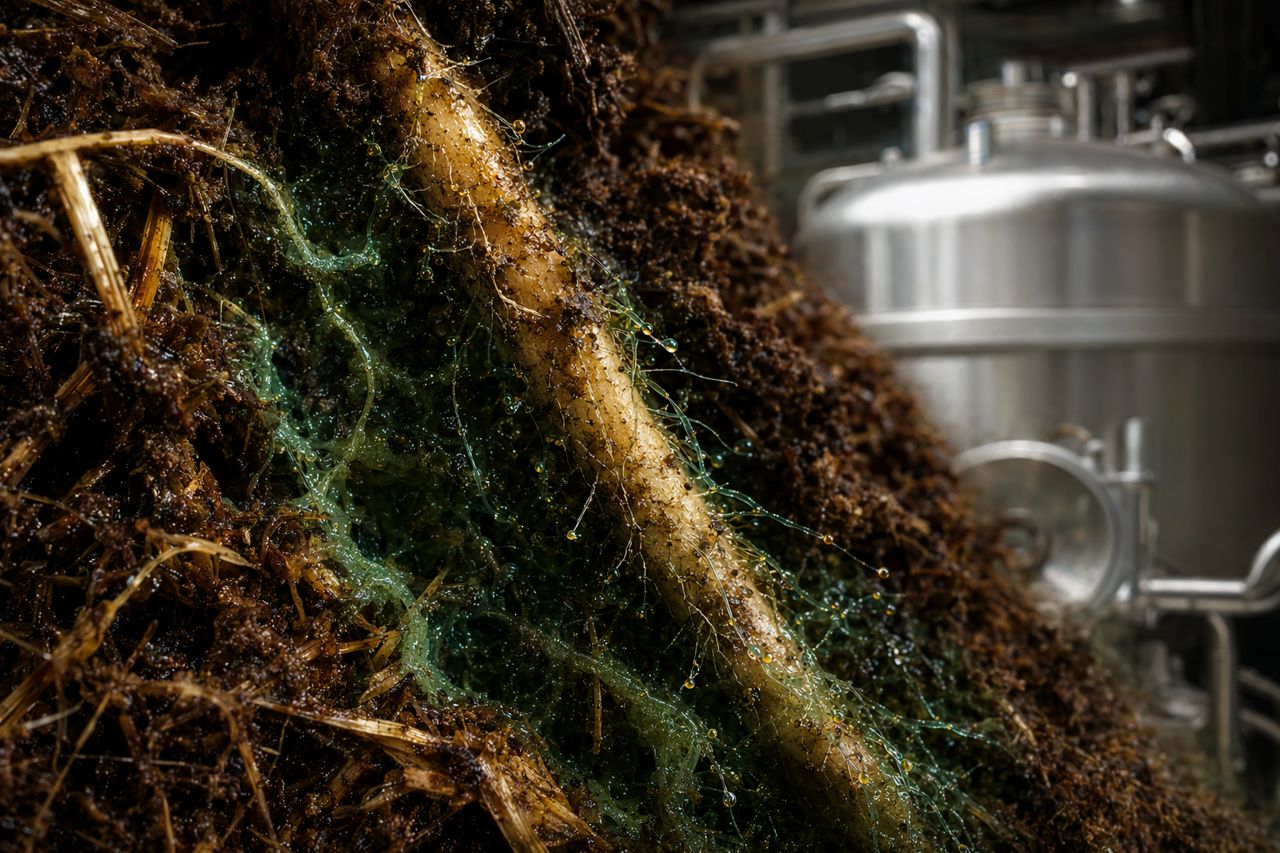
Cellulase can support the breakdown of cellulose-rich structures, making fibrous material easier to process and more accessible to microbial activity. In plant-floor terms, that may mean improved wetting, better dispersion, less stubborn fiber clumping, and more predictable transformation during composting or controlled fermentation stages.
Common production uses
- Pre-treatment of fibrous residues before composting or fermentation
- Support for organic matter conversion in humic or compost-based products
- Improved handling of plant-derived carriers
- Better consistency when raw crop residue quality changes by season
Fit considerations
Cellulase performance depends heavily on moisture, particle size, mixing, contact time, and heat history. It should be evaluated against your actual substrate because fiber composition varies widely between straw, husk, bagasse, and composted plant matter.
Phytase for organic phosphorus release
Phytase is relevant when your raw materials include phytate-containing plant meals or cereal byproducts. Many organic inputs contain phosphorus, but not all of it is readily accessible in the desired form.
Where it helps
Phytase supports the release of phosphorus from phytate-bound organic sources. For fertilizer manufacturers, this can be useful when building products around plant meals, bran fractions, oilseed meals, or blended organic nutrient systems.
Common production uses
- Organic phosphorus improvement in plant-meal-based formulations
- Pre-treatment of cereal and oilseed byproducts
- Support for nutrient availability in blended organic fertilizers
- Process development for phosphorus-focused biofertilizer lines
Fit considerations
Phytase should be matched to the pH window, mineral profile, and processing sequence. Some raw materials buffer strongly, and minerals can influence how the ingredient behaves in a real blend. If the finished product contains live microbes, compatibility should be checked within the full formulation rather than assumed from the enzyme type alone.
Protease for protein-rich fertilizer substrates
Protease is used where the formulation contains protein-rich materials such as oilseed cakes, seed meals, fermentation biomass, proteinaceous residues, or certain compost inputs.
Where it helps
Protease breaks down proteins into smaller nitrogen-containing fractions. This can support nitrogen availability and improve the transformation of dense organic materials before blending, granulation, or liquid formulation.
Common production uses
- Pre-treatment of seed cakes or plant meals
- Support for nitrogen-focused organic fertilizer products
- Processing of fermentation-derived biomass fractions
- Improved conversion of high-protein raw material streams
Fit considerations
Protease can change odor profile, viscosity, and microbial growth behavior depending on substrate and process stage. In biofertilizer manufacturing, it is especially important to consider whether protease is used before inoculation, during co-processing, or only in a separate substrate preparation step.
Amylase for starch-bearing inputs
Amylase is useful when your plant handles starch-rich materials such as cereal fractions, grain byproducts, tuber residues, or starch-containing process streams.
Where it helps
Amylase converts starch into simpler carbohydrate fractions. This may improve slurry behavior, reduce inconsistency in starch-heavy batches, and provide more predictable feedstock behavior during fermentation or microbial conditioning.
Common production uses
- Starch-rich substrate pre-treatment
- Viscosity management in liquid or semi-liquid organic inputs
- Support for controlled fermentation feed preparation
- Batch consistency improvement where cereal byproducts vary
Fit considerations
Amylase can increase available sugars, which may affect microbial activity, stability, and contamination risk if not managed carefully. The best process position depends on whether you want carbohydrate conversion before inoculation, during fermentation, or as part of a separate feedstock preparation step.
Matching enzymes to organism viability
Biofertilizer products may include living organisms such as Bacillus, Paenibacillus, Pseudomonas, Trichoderma, Azotobacter, phosphate-solubilizing microbes, mycorrhizal components, or other beneficial cultures.
When enzymes are used in the same production environment, the key question is not only whether the enzyme converts substrate. It is whether the process still protects organism viability and final product performance.
Enzymesportal helps evaluate practical compatibility factors such as:
- Enzyme addition point relative to inoculation
- Exposure to heat, drying, granulation, and storage
- Moisture and water activity in the final format
- Carrier chemistry and adsorption behavior
- Preservatives, minerals, humics, and surfactants in the blend
- Packaging and shelf-life expectations
Process placement: where enzymes can fit
The same enzyme may behave differently depending on where it enters the plant process.
Substrate pre-treatment
Best when the goal is to convert raw material before it meets living inoculants or final carriers. This is often used for fibrous, protein-rich, or starch-bearing feedstocks.
Fermentation support
Best when the enzyme is intended to make nutrients more accessible during a controlled culture or conditioning step. This requires close attention to organism compatibility and contamination control.
Composting or curing stage
Best for plant-derived biomass where gradual organic matter transformation is desired. Moisture, aeration, and temperature history are important.
Final blending
Used more cautiously. Enzyme addition at final blending may be appropriate in some dry or carrier-based products, but it must be reviewed for stability, claim structure, and organism compatibility.
What to share when requesting a quote
To recommend the right enzyme type and supply format, we need to understand your plant reality. Useful details include:
- Raw materials and approximate blend composition
- Current process stage where enzyme addition is being considered
- Product format: powder, granule, pellet, liquid, compost-based, or carrier-based inoculant
- Target outcome: fiber opening, phosphorus release, nitrogen availability, viscosity control, fermentation consistency, or handling improvement
- pH range, moisture profile, and heat exposure in the process
- Organisms used in the final product, if applicable
- Batch size, production frequency, and expected purchasing schedule
- Documentation or import requirements for your market
We do not need a perfect formulation to start. A practical process description is often enough for initial screening.
Why work with Enzymesportal
Enzymesportal supports organic fertilizer and biofertilizer manufacturers that need enzyme ingredients selected for real production conditions, not generic catalog assumptions.
B2B value for plant teams
- Side-by-side enzyme selection for mixed organic substrates
- Practical guidance on addition point and process fit
- Support for compatibility discussions around live microbial products
- Supply planning for recurring production, pilot batches, and scale-up
- Documentation support for procurement and technical review
- Consistent communication with production, quality, and purchasing teams
As an enzyme supplier for biofertilizer manufacturing, our role is to help you reduce trial-and-error, choose the right enzyme family, and move toward a quote-ready specification.
Request a quote
We supply organic fertilizer plants, amino-acid and seaweed fertilizer makers, and distributors and resellers of fertilizer inputs. Use the inquiry form on this page and send:
- The enzyme type, or the raw material you want to treat (oilseed meal, seaweed, crop residue, starch by-product)
- Where the enzyme would enter your process
- Quantity per order or per month
- Destination country
Pack size, documents and delivery terms are quoted per order.